
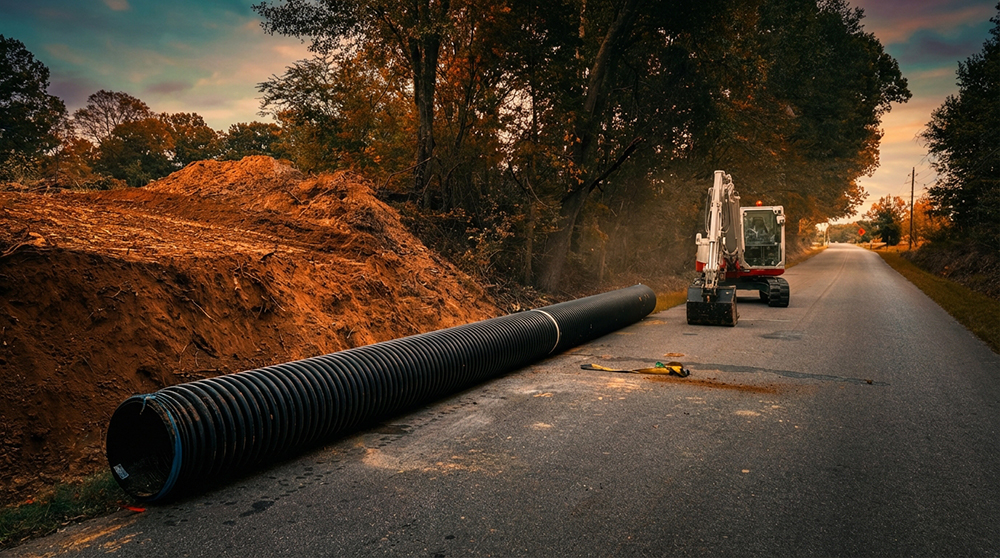
If you're planning a new home build, adding a pool, installing a septic system, or tackling a major landscaping project, you'll likely need excavation work. For most homeowners, it's their first time hiring an excavation contractor — and the process can seem intimidating if you don't know what to expect. This guide walks you through a typical residential excavation project from start to finish.
What Is Excavation?
Excavation is the process of moving earth — cutting, filling, and shaping the ground to create the conditions a project requires. This might mean digging a foundation, clearing topsoil from a building pad, trenching for utilities, or reshaping a slope for drainage. It's the foundational work that makes everything else possible.
Step 1: Site Assessment and Estimate
Before any equipment shows up, a reputable excavation contractor will visit your property to assess the site. They'll look at:
- Access — Can equipment reach the work area? Are there fences, trees, or overhead lines in the way?
- Soil conditions — Clay, rock, sandy soil, and loam all behave differently and affect how the work is done
- Existing utilities — Underground lines that need to be located and avoided
- Drainage — How does water currently move across the site, and how will excavation affect it?
- Scope — How much material needs to be moved, and where will it go?
After the site visit, you'll receive an estimate covering the scope of work, equipment, and any hauling or fill material required.
Step 2: Utility Locating (Call 811 Before You Dig)
Before any digging begins, Tennessee law requires contacting 811 — the national "Call Before You Dig" service — to have underground utilities marked. This identifies the location of gas, water, electric, and telecom lines so they're not struck during excavation. Your contractor should handle this, but it's worth confirming before work starts. In Tennessee, utilities must be marked within 3 business days of the request.
Step 3: Permits (When Required)
Some excavation projects require permits, particularly:
- New construction — Building permits typically cover site work
- Grading near waterways — May require stormwater permits
- Septic systems — Require health department permits in most Tennessee counties
- Significant land disturbance — Projects disturbing an acre or more may require an NPDES stormwater permit
Your contractor can advise on what's required for your specific project. In most residential cases, your general contractor or builder handles permitting, with the excavation contractor working within that permitted scope.
Step 4: Site Preparation
Before excavating, the crew preps the site:
- Staking and marking — The work area is laid out to match the project plans
- Tree and vegetation removal — If land clearing is part of the scope, this happens first
- Topsoil stripping — The organic topsoil layer is removed and stockpiled separately for later use or removal
Step 5: Excavation
This is the main event — equipment moves in to cut and move earth. Depending on the project, this might involve:
- Excavators (trackhoes) for digging foundations, ponds, and utility trenches
- Bulldozers for pushing large volumes of material across the site
- Skid steers for fine grading and work in tight areas
- Dump trucks for hauling material on and off site
In West Tennessee's heavy clay soil, excavation is rarely as straightforward as it looks. Clay digs differently than sandy soil, becomes extremely heavy when wet, and requires proper management to avoid turning a job site into a muddy mess.
Step 6: Grading and Compaction
After material is moved, the site is graded — shaped to the elevations and slopes the project requires. Building pads are established level and firm. Drainage grades are set to direct water away from structures. Compaction equipment consolidates the subgrade so it can support whatever comes next without settling.
Proper compaction is critical for building projects. An uncompacted fill area will settle over time, causing cracking, uneven surfaces, and structural problems. Reputable contractors compact in lifts — layers of fill material compacted progressively — rather than dumping a large amount of fill and compacting it all at once.
Step 7: Cleanup and Restoration
At the end of the project:
- Excess material is hauled off or spread as directed
- Disturbed areas outside the work zone are rough-graded and seeded or restored
- Equipment tracks, mud, and debris are cleaned up
A professional contractor leaves the site in a condition that's ready for the next phase of work — not a torn-up mess.
What Does Excavation Cost?
Residential excavation costs vary widely based on:
- Volume of material to be moved — Measured in cubic yards
- Soil conditions — Rock excavation costs significantly more than soil
- Access and site constraints — Tight access requires smaller equipment or more time
- Hauling — Removal and disposal of excavated material adds cost
- Fill material — If you need clean fill, structural fill, or gravel brought in, that's additional
The only accurate way to price an excavation project is an on-site estimate. Ballpark figures from the internet are nearly useless — two projects of similar apparent size can have dramatically different costs based on soil, access, and what happens to the material.
Hiring an Excavation Contractor in Memphis
When evaluating contractors, look for:
- Experience with residential work — Not all heavy equipment operators have experience with the precision finish grading residential projects require
- Proper insurance — Excavation involves heavy equipment, significant ground disturbance, and potential underground utility risk. Confirm the contractor carries general liability and workers' compensation
- Clear communication — A contractor who explains the work, answers your questions, and gives you a written estimate is one you can work with
Iron Faith Dirt Works handles excavation projects of all sizes throughout the greater Memphis area — from foundation digs and utility trenching to site prep for new construction. Call or text (870) 636-2639 for a free on-site estimate.